Siblings share about half their genes
On average, full siblings share around 50% of their DNA. The other half is a different draw from the same two parents.
AI sibling generator predicts what a second baby will look like from both parents' photos. Sibling AI maker creates a realistic portrait of a brother or sister for an existing child.
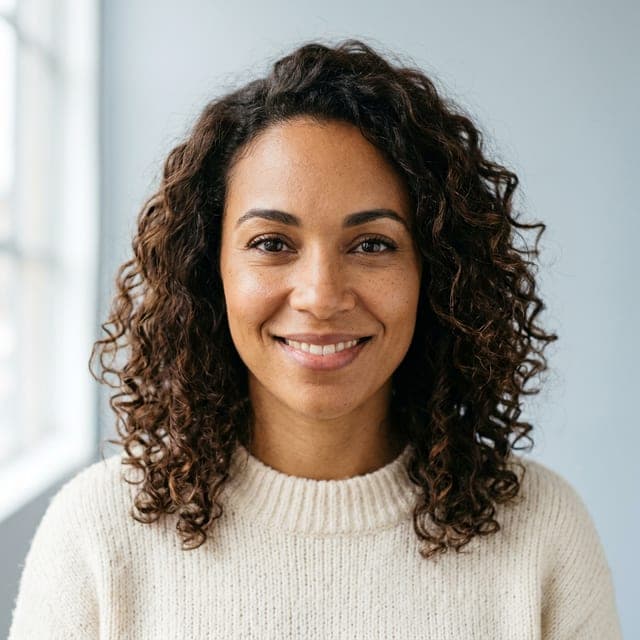

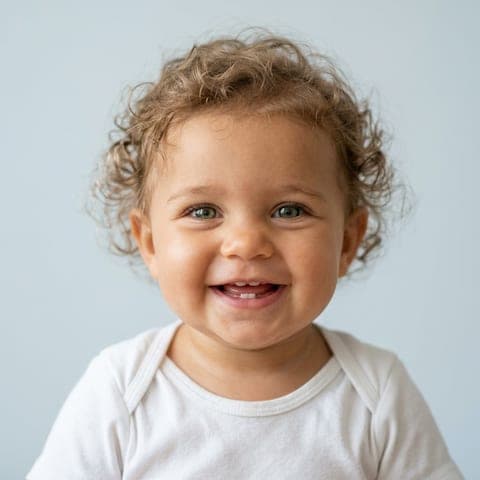 1st
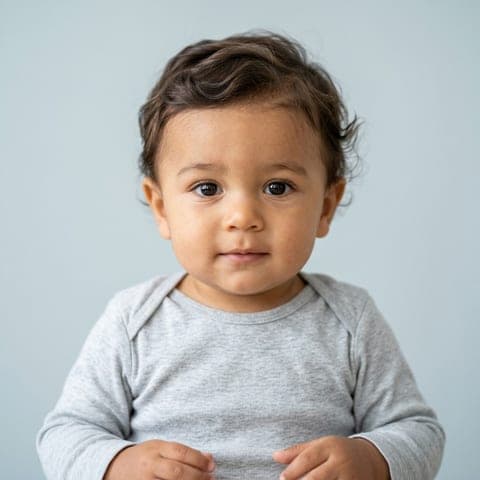 2nd?
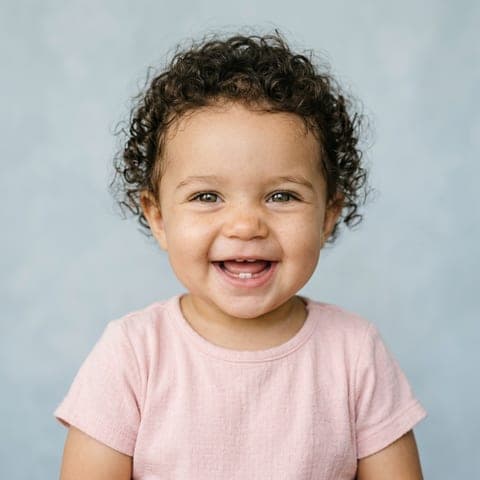 2nd?
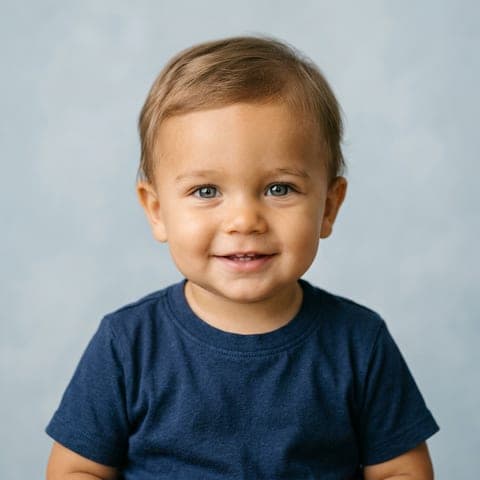 2nd?
Same parents, a new mix each time
Example family is AI-generated and fictional. We never ask for a photo of your child.
Takes about a minute. Nothing is charged yet.
AI sibling generator predicts a second baby from photos of both parents. No photo of your first child is needed: parents upload their clearest available photos, and the AI sibling generator generates a visual preview of a potential sibling.
The same two people as your first child's parents. One clear, front-facing photo each.
Pick the sibling you're imagining, or surprise me. Baby, child or teen.
4 different babies, each with a note on which traits came from whom. Download the ones you love.
Maybe a lot, maybe hardly at all. Siblings come from the same two parents but never from the same mix, which is why our AI sibling generator shows several possible brothers or sisters instead of one copy of your first child. The same mix of both parents' features powers our AI baby maker for a first baby.
Example family: fictional, AI-generated people.
On average, full siblings share around 50% of their DNA. The other half is a different draw from the same two parents.
Each child gets a fresh, random half of each parent's genes. That's why one child can take after Mom and the next after Dad.
Parents can carry traits they don't show, like blue eyes or red hair. One child may get them while their sibling doesn't.
A second baby prediction should look like part of the same family. Every baby here is built from both parents' real features, the same ones your first child inherited from. For a mixed-race family, the Mixed Race Baby Generator shows how each child's skin tone is checked against both parents.
Each of the 4 babies takes a different split of both parents' traits, just like real siblings.
Choose the sibling you're imagining, or let it surprise you.
Every baby stays within both parents' skin tone range, or it's redone or refunded.
The resemblance slider leans the babies toward Mom or Dad.
Only the parents' photos, deleted within 24 hours and never used to train AI.
AI sibling generator offers five sibling modes: both parents' photos, brother and sister versions, twins, age-matched sibling, and family portrait.
Two-parent mode predicts a second child from one clear, front-facing photo of each parent. Your first child's features came from the same two faces, so the sibling shares the family look.
Choose boy or girl to see a brother or a sister version of your second child. Make both and compare them side by side before you know the baby's sex.
Twin mode draws two babies together in one portrait, each with features from both parents. A playful keepsake, not a genetic or medical forecast.
Pick baby (about 1), child (about 6) or teen (about 15) to match your first child's age. See the new sibling at the same stage, ready for birthday or school-milestone comparisons.
Family portrait mode shows both parents together with the predicted sibling in one photo. Save, print, or share it as a keepsake or an announcement.
Families use AI sibling generator portraits to introduce a new baby, announce a second pregnancy, reveal the sibling's gender, and give grandparents a keepsake.
Sibling portraits help your first child picture a new brother or sister before birth. A face makes the big-brother or big-sister role feel real and gives you an easy way to talk about the new arrival.
A predicted sibling portrait makes a second pregnancy announcement people remember. Share it on social media, printed cards, or video calls, labeled as AI art so nobody mistakes it for a scan.
Make a brother and a sister version from the parents' photos, then reveal the one that matches your news. Keep both as a family memento.
A sibling portrait is a personal gift for grandparents waiting to meet the new grandchild. Paid images download full size without a watermark, ready to frame or print.
Your first result is free. After that, 1 credit is 1 image and a run of 4 babies uses 4 credits. The same credits work across every generator.
Starter
Two full runs of four children.
$4.99one-time
Most popular
Family
Try every age, twins and a family portrait.
$9.99one-time
Big family
For the whole family to play with.
$19.99one-time
An AI sibling generator is a tool that predicts the facial appearance of a new child from the parents' features. AI sibling generators assess visible facial characteristics, such as eye shape, nose structure, and facial proportions, to create a synthetic sibling face. The sibling face reflects likely family resemblance rather than actual genetic inheritance. Users choose the predicted sibling's gender, brother or sister, and an age that matches the existing child's. AI sibling generators use computer vision and generative models to portray what a second or third child might look like, while acknowledging the genetic variation among siblings.
An AI sibling generator creates a new face by synthesizing features from uploaded family photos, while a photo collage tool arranges existing images without generating new facial features. The sibling generator uses AI to model inherited traits, producing a predicted face that resembles family members. Collage tools only combine or edit current photos and cannot produce new imagery.
You upload a photo of each parent. A vision model reads both faces, then an image model draws 4 babies, each with a different mix of your traits, the way real siblings differ.
The criteria for choosing an AI sibling generator are listed below:
Baby AI Generator meets each criterion with matched sibling faces, gender and age controls, and private result handling.
Yes, each new run predicts another sibling from the same photos. Baby AI Generator's AI sibling generator processes the parent photos independently with each use, producing a new combination of facial features every time. Our generator simulates how a third, fourth, or fifth baby might look while keeping the family resemblance that comes from both parents. Each run introduces variation that reflects the natural genetic variety in families, so Baby AI Generator predicts any number of siblings by recombining parental features in new patterns.
Siblings from the same parents look different because each child inherits a different random combination of genetic material. The Tech Interactive and Stanford genetics Q&A "Why do children from the same parents have different appearances and personalities?" by Kim Vande Wydeven, January 2011, explains that each parent passes only half of their genes to a child and that which of a parent's two gene copies the child receives is chosen at random. The genetic shuffling, known as independent assortment, makes siblings share family traits without being identical. Siblings share about 50% of their DNA on average, yet each child has a distinct genetic makeup. Variable genetic inheritance gives siblings both shared and individual features.
Independent assortment and recombination create genetic variety among siblings. Independent assortment happens during meiosis, when chromosomes are randomly distributed into egg and sperm cells, giving each sibling a different genetic mix. Recombination, or crossing over, mixes genetic material further by exchanging DNA segments between paired chromosomes. Nature Education's Scitable article "Mitosis, Meiosis, and Inheritance" by Ilona Miko, 2008, calculates that independent assortment alone gives two siblings about a one in 6.27 billion chance of inheriting the same combination of chromosomes, before recombination adds further variety. Both mechanisms explain why siblings share family traits yet have distinct physical characteristics.
Yes, a second baby can look very different from the first. Each child inherits a different combination of genes from the parents, which produces distinct physical traits. Recessive traits that are not visible in the first child can appear in the second. Genetic variation means siblings may share few visible similarities despite having the same parents.
No, identical twins share almost all DNA but still differ in small features. Identical twins come from the same fertilized egg and carry the same genetic blueprint, but variations arise during development. MedlinePlus Genetics confirms in "Are fingerprints determined by genetics?" (National Library of Medicine, July 2022) that even identical twins, who have the same DNA, have different fingerprints, because other factors during fetal development shape the finer ridge patterns. Subtle facial differences emerge through developmental and epigenetic factors rather than genetic differences. Environmental factors such as nutrient flow and position in the womb shape the physical characteristics that distinguish one twin from the other.
A second baby prediction is accurate as a likely family resemblance, not as a genetic forecast. AI sibling generators analyze visible features in photos of the parents to create a plausible image of a second child, blending shared family traits such as face shape, skin tone, and feature proportions. AI sibling generators cannot account for the thousands of hidden gene variants each parent carries. Real genetics involves random recombination at conception, so each sibling receives a different half of each parent's DNA, and the actual second baby may express traits not visible in the reference photos. Sibling predictions show what a sibling might look like if resemblance follows visible patterns, and they serve emotional connection and anticipation rather than clinical accuracy.
AI sibling generators have limits in predicting eye and hair color because of how genetic inheritance works. Recessive eye and hair colors carried by parents stay hidden in photographs, which can make predictions inaccurate. A parent with brown eyes, for example, may carry a recessive blue-eye gene that never shows in their appearance and stays undetectable in photos. The prediction reflects the most statistically likely combination of visible parental features, not the unexpressed alleles that might appear in the second child. AI predicts facial structure and visible traits but cannot account for genetic variations that are not visually apparent.
It may share a family look, because it's built from the same two parents. But real siblings can look very different, and so can these babies. It's a likeness for fun, not a genetic prediction.
Yes. Pick brother, sister, twins or surprise me, and choose baby, child or teen.
No. We don't accept photos of children for any feature. Your child's features came from both of you, so the parents' photos are all the generator needs.
Your first result is free: 1 real baby, small and watermarked, no card needed. After that, a run of 4 babies uses 4 credits; packs start at $4.99 that never renew, and monthly plans are optional.
They're used only for your results and deleted automatically within 24 hours. They're never used to train AI models.
Meet your second baby. Your first result is free
Meet the sibling