Mixed-Race Baby Skin Tone
Each run shows a range of skin tones instead of one averaged shade, all kept between both parents'. Like real siblings, one child may land closer to one parent and another in between.
AI baby generator for mixed-race couples predicts a mixed-race baby's appearance from both parents' photos. Preserves each parent's heritage, Black, Asian, Hispanic, Indian, and White heritages and shows how each heritage might blend in a child.
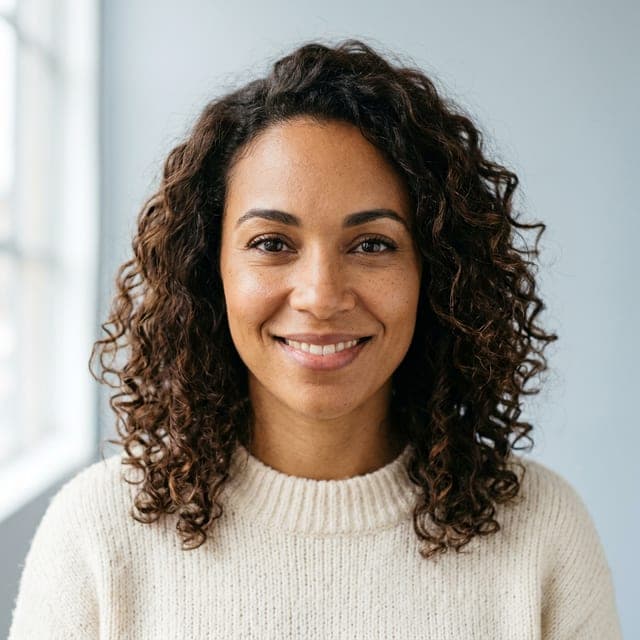

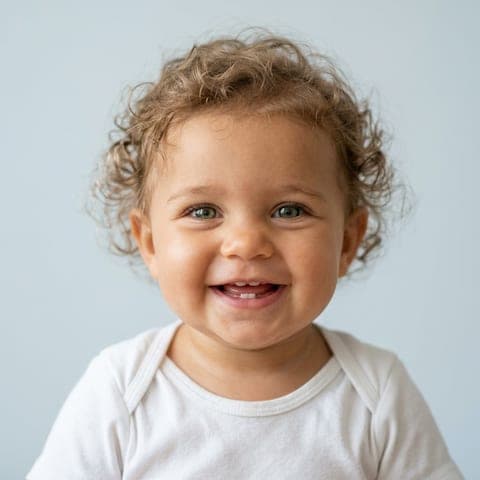
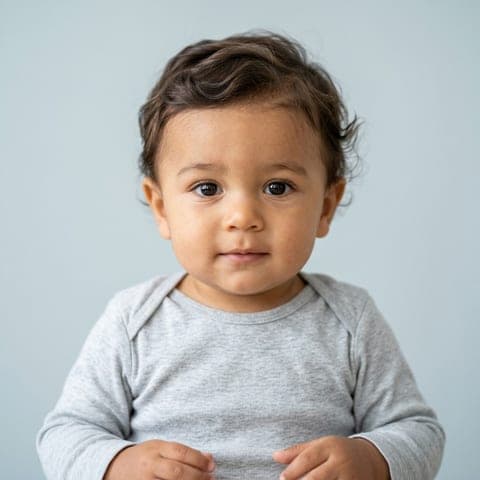
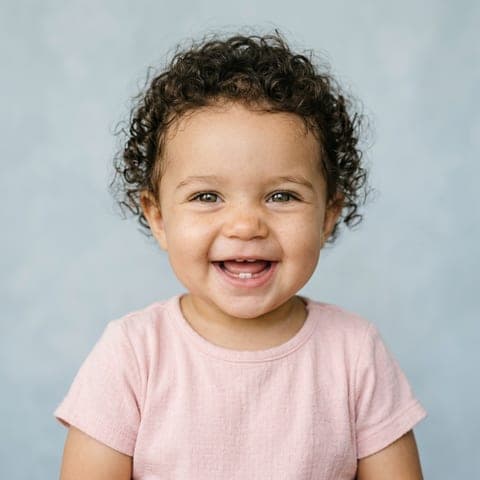
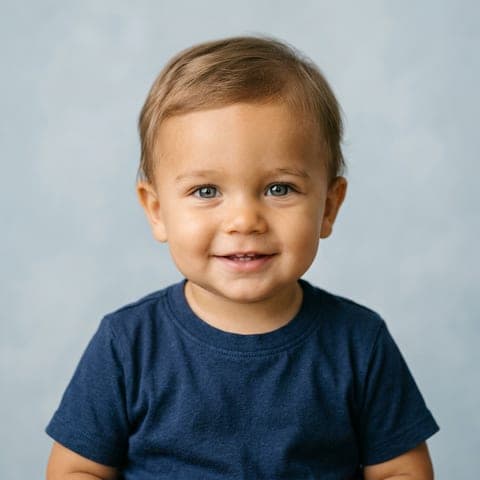
Example family is AI-generated and fictional. Tones shown are illustrative.
Takes about a minute. Nothing is charged yet.
Predicts a mixed-race baby from both parents' photos, capturing skin tone, eye shape, and hair features from each heritage. It runs on the same AI baby generator as our home page, with every child's skin tone checked against both parents.
One clear photo each in natural, even light. Heavy filters and beauty mode change skin tone, so skip them.
A vision model rates each parent on the 10-step Monk skin tone scale, plus eyes, hair color, hair texture and face shape.
4 different children, each mixing your traits, each checked to stay within your two skin tones.
The mixed-race couples AI generator predicts three baby traits: skin tone, eye color, and hair texture.
Each run shows a range of skin tones instead of one averaged shade, all kept between both parents'. Like real siblings, one child may land closer to one parent and another in between.
Eye color comes from what both parents' photos show, with variations from dark brown to lighter shades. A photo can't show hidden recessive genes, so for the odds of each shade, use the eye color calculator.
Try the eye color calculatorHair texture is predicted from both parents' natural hair, from straight to coily, with different textures across the children instead of one average.
The mixed-race couples AI generator creates six heritage pairings: Black and White, Asian and White, Asian and Black, Hispanic and White, Indian and White, and two mixed parents.
Shows the skin tones and hair textures a baby can inherit from a Black and a White parent, with hair from loose waves to tight coils and every skin tone kept within both parents' range.
Blends eye shape, hair color, and skin tone from an Asian and a White parent, from monolid to double-lid eyes and dark to lighter hair, across several possible children instead of one average.
Combines skin tone, hair texture, and eye shape from an Asian and a Black parent, with hair from wavy to tightly coiled and eye shapes from both sides.
Covers the wide range of skin tones and hair colors from Hispanic and White parents, whose Indigenous, European, and African roots can show up differently in each child.
Shows skin tones from light olive to deeper brown, hair from straight to curly, and eye colors from dark brown to lighter shades, depending on each parent's features.
For parents who are both mixed, it blends every heritage visible in both photos into children with a wide range of skin tones, hair textures, and eye shapes.
Built so that every child looks like it comes from both of you, not just one. Already have a child together? The AI Sibling Generator shows their possible brothers and sisters from the same two photos.
Both parents rated on the Monk scale before anything is drawn.
Lighter or darker than your range? Redone once, otherwise refunded.
Each child takes a different split of your features, like real siblings.
The resemblance slider leans toward Mom or Dad while the tone stays in range.
Your photos are deleted within 24 hours and never used to train AI.
Credit packs from $4.99, paid once, and credits never expire. A monthly plan is optional and cancels any time.
Your first result is free. After that, 1 credit is 1 image and a run of 4 children uses 4 credits. Images that fail the skin-tone check are refunded automatically.
Starter
Two full runs of four children.
$4.99one-time
Most popular
Family
Try every age, twins and a family portrait.
$9.99one-time
Big family
For the whole family to play with.
$19.99one-time
Your mixed-race baby will look like a blend of many genes from both parents. Each child receives a different combination of genetic variants, which shapes skin tone, eye color, and hair texture. Genetic variability means siblings from the same parents can look quite different, with one child inheriting a darker complexion and another lighter skin. The Tech Interactive and Stanford genetics Q&A "Why do my brother and I look so different?" by George Wang, September 2008, describes twin boys born with one light and one dark skin color, because at least seven different genes affect skin tone. A mixed-race baby's features are a blend of probabilities rather than certainties.
A mixed-race baby generator creates a visual likeness of a child by blending both parents' facial features into a portrait, while a genetics calculator estimates the probability of inheriting traits such as eye color or hair type from alleles and genotypes. The generator gives a visual preview built from the parents' skin tone, hair texture, and eye shape. The genetics calculator gives statistical probabilities based on known inheritance patterns. Mixed-race couples use both tools: the generator for the visual picture and the calculator for genetic likelihoods.
The criteria for choosing an AI baby generator for mixed-race couples are listed below:
Yes, mixed-race couples can predict a second baby with the same photos. Baby AI Generator processes the same parental images to show how a sibling might inherit a different combination of features from both heritages. Each sibling receives a different mix of alleles from each parent, which is why siblings from the same mixed-race couple can look noticeably different. Our generator captures the genetic variability with a range of outcomes that express both parents' heritage markers in different ways. Couples see how a second child might look and how much variety mixed-race family genetics can produce.
Yes. Each of the 4 children gets a different mix of your traits, including skin tone within your range, just like real siblings.
Skin color in mixed-race babies is inherited polygenically, through multiple genes that contribute to melanin production. Each parent passes on a different set of gene variants that influence melanin levels, producing a wide range of possible skin tones. Melanin comes in two types: eumelanin, which gives brown-to-black hues, and pheomelanin, which gives red-to-yellow tones. The mix of both pigments inherited from both parents creates a spectrum of skin colors in mixed-race children. A 2017 study by Martin et al. in Cell, "An Unexpectedly Complex Architecture for Skin Pigmentation in Africans," found that baseline skin pigmentation is a complex, polygenic trait in which known pigmentation loci explain only a small fraction of the variance. Polygenic inheritance explains why siblings with the same parents can have noticeably different skin tones.
Yes, a mixed-race baby can be lighter or darker than both parents. Each child inherits a different combination of skin tone alleles from each parent. Multiple genes influence skin color, not a single "light" or "dark" gene, which allows a wide range of outcomes. Siblings from the same parents can show different skin tones for the same reason.
A mixed-race newborn's skin color settles over the first six to twelve months as melanin production increases and stabilizes. Newborns have lighter skin that darkens gradually during the first months, because melanin develops progressively after birth. At six to twelve months, the skin tone becomes more predictable as melanocyte activity reaches a consistent level. The American Academy of Pediatrics notes in "How Your Newborn Looks" (HealthyChildren.org, March 2021) that babies' lighter skin at birth gradually darkens as they grow older.
Not exactly: skin tone depends on many genes. What we guarantee is that every child we show has a skin tone between yours, give or take one step on the Monk scale, and that the four children land at different points in that range.
Image models learn from photo collections that underrepresent many families, and they drift toward lighter skin. We measure both parents and check every result, so drifts are caught and redone or refunded.
Natural, even daylight, no filters or beauty mode, and no strong colored light. Use photos taken in similar light for both parents if you can.
Your first result is free: 1 real child, small and watermarked, no card needed. After that, a run of 4 children uses 4 credits; packs start at $4.99 that never renew, and monthly plans are optional.
They're used only for your results and deleted automatically within 24 hours. They're never used to train AI models.
Meet children who look like both of you. Your first result is free
Generate our children