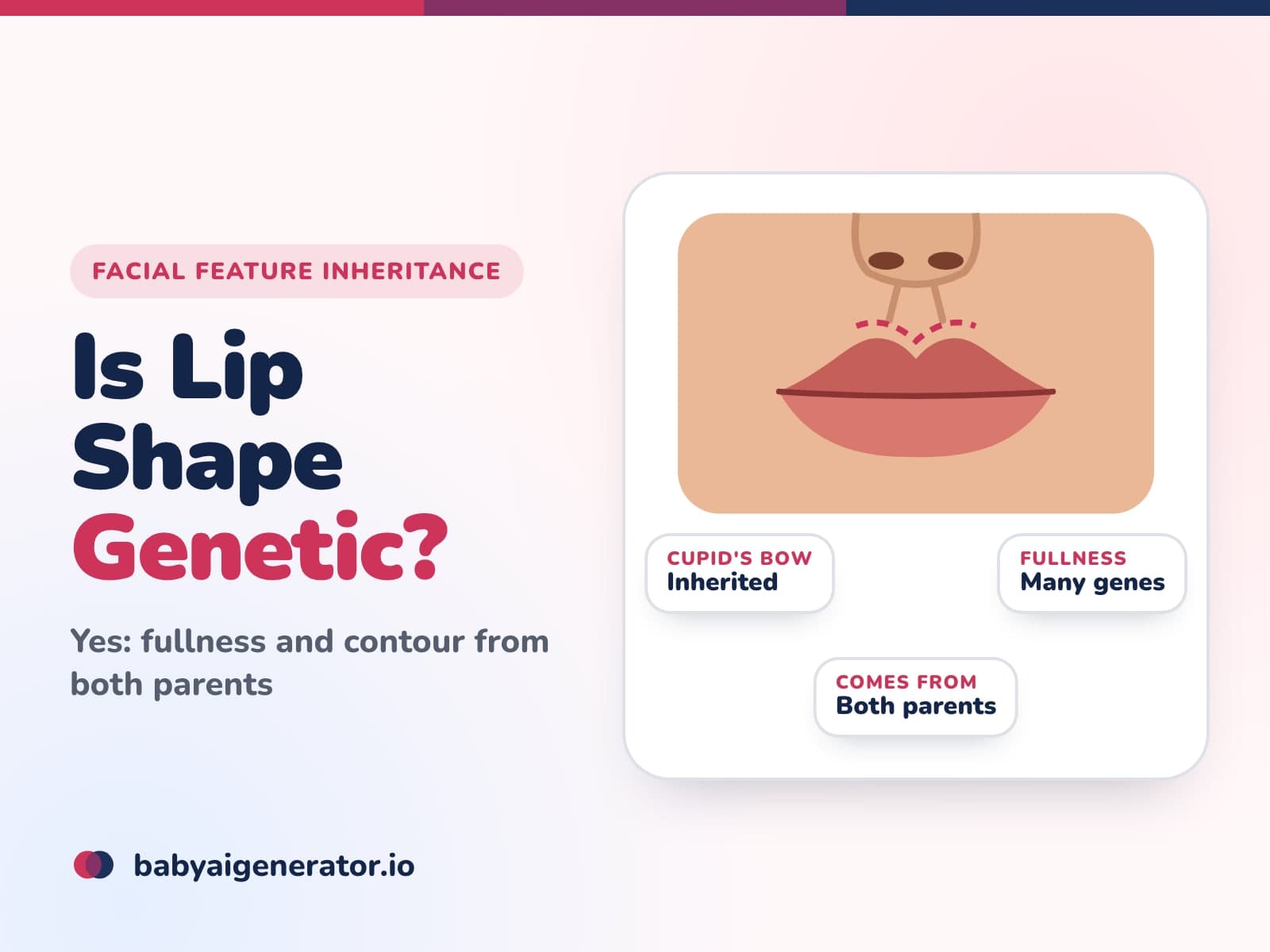
Yes, lip shape is genetic. Lip fullness and contour pass from both parents through the interaction of several genes, and lip shape covers the fullness, width and outline of the upper and lower lips, including the cupid's bow and the philtrum, the vertical groove between the nose and the upper lip.
Full lips are not simply dominant or recessive. Lip shape is a polygenic trait shaped by many genes, so a child can inherit a combination of variants that produces fuller, thinner or heart-shaped lips, and because both parents contribute, lip shape does not come from one parent alone. Genes guide the development of the lips, the cupid's bow and the philtrum, and the common lip shapes include full, thin and heart-shaped lips.
Ethnicity affects inherited lip shape, since the variants linked to lip shape differ in frequency between populations. The rarest lip shape is hard to define, siblings have different lip shapes because each inherits a different combination of variants, and a baby's lip shape can be predicted only to some extent, with the AI Baby Generator analyzing lip contours and fullness in neutral-expression parent photos. Lips change in fullness and proportion as a child grows along with the nose, jaw and face, a baby can have lips unlike either parent, and most lip characteristics come from inherited DNA, while aging and sun exposure change lip appearance over time.
Is Lip Shape Inherited From Parents?
Yes, lip shape is inherited from parents. Many genes contribute to the fullness, width and contour of the lips, and the polygenic pattern combines genetic material from the mother and the father, so each parent provides about half of the genetic information. A child's lips can closely resemble one parent, blend features from both or show traits mirrored in neither.
Siblings can have different lip shapes because each inherits a different combination of variants, and growth and environmental factors add to the variety of lip shapes within a family.
Are Full Lips Dominant or Recessive?
Full lips are not strictly dominant or recessive. Lip fullness depends on many genes that each contribute a small effect, which makes it a polygenic trait rather than one controlled by a single gene. Two parents with full lips can therefore have a child with thinner lips, and the reverse, while ancestry, age and sex shape lip measurements as well beyond the classic Mendelian model.
Is Lip Shape Inherited From the Mother or the Father?
Lip shape is inherited from both the mother and the father in equal measure. Many genes from each parent contribute to a child's lip fullness, width and contour, and because the trait is polygenic, no one can predict which parent will have more influence. Each parent's contribution combines into a lip shape that may resemble one parent more, blend both or differ from either.
What Determines Lip Shape?
Lip shape is determined by genetic, anatomical and environmental factors together. Genes inherited from both parents set the fullness, contour and symmetry of the lips, and the orbicularis oris muscle and the bone structure of the jaw and maxilla shape the lips too.
Genetic factors are the main determinants of lip shape, influencing the thickness of the upper and lower lips, the width of the mouth and the shape of the cupid's bow. During early fetal development, facial tissues fuse to form the basic structure of the lips, and nutrition and prenatal health can affect that process. Aging, sun exposure and lifestyle alter lip appearance later in life, and the genes and lip landmarks behind lip shape are explained below.
Which Genes Shape the Lips?
The genes that shape the lips are many, and no single gene decides whether lips are full or thin. Genome-wide studies have linked several genetic regions to lip shape, including a region near the FREM1 gene associated with the height of the central upper lip and the shape of the philtrum. A University of Pittsburgh team led by Lee reported the FREM1 signal for central upper lip height in "Genome-wide association study of facial morphology reveals novel associations with FREM1 and PARK2" (2017), a study of 2,187 adults of European ancestry. Lip genes work together with many other variants, so the shape of the lips results from multiple genetic factors acting at once.
Cupid's Bow and Philtrum
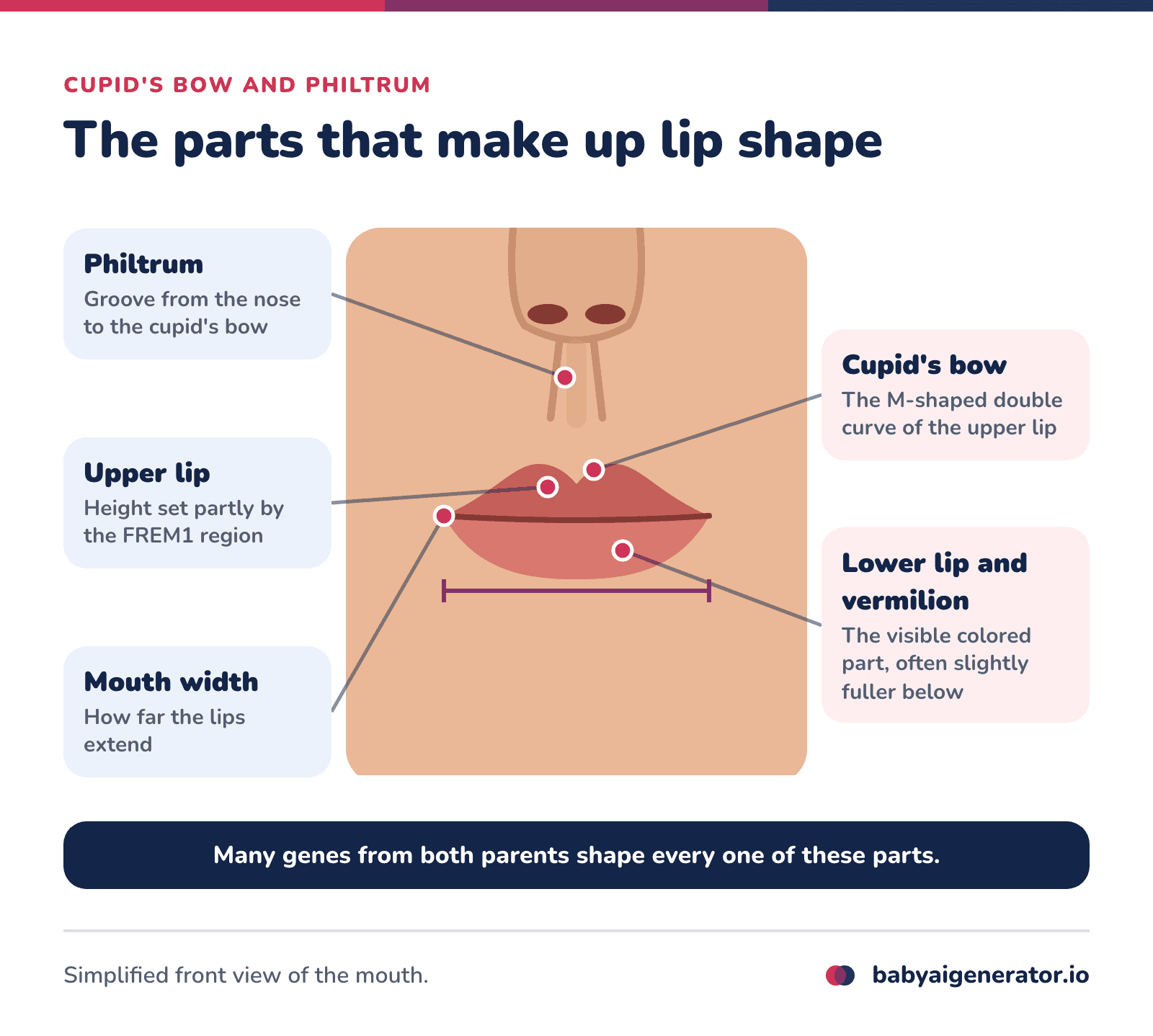
The cupid's bow and philtrum are the defining landmarks of the upper lip. The cupid's bow is the double-curved contour of the upper lip that creates an M-shaped or heart-like outline, named after the bow of Cupid, and its prominence ranges from a sharply defined curve to an almost flat upper lip line. The philtrum is the vertical groove that runs from the base of the nose to the cupid's bow, forming during fetal growth when facial tissues fuse under genetic influence, and together the cupid's bow and philtrum shape the look of the mouth.
What Are the Different Lip Shapes?
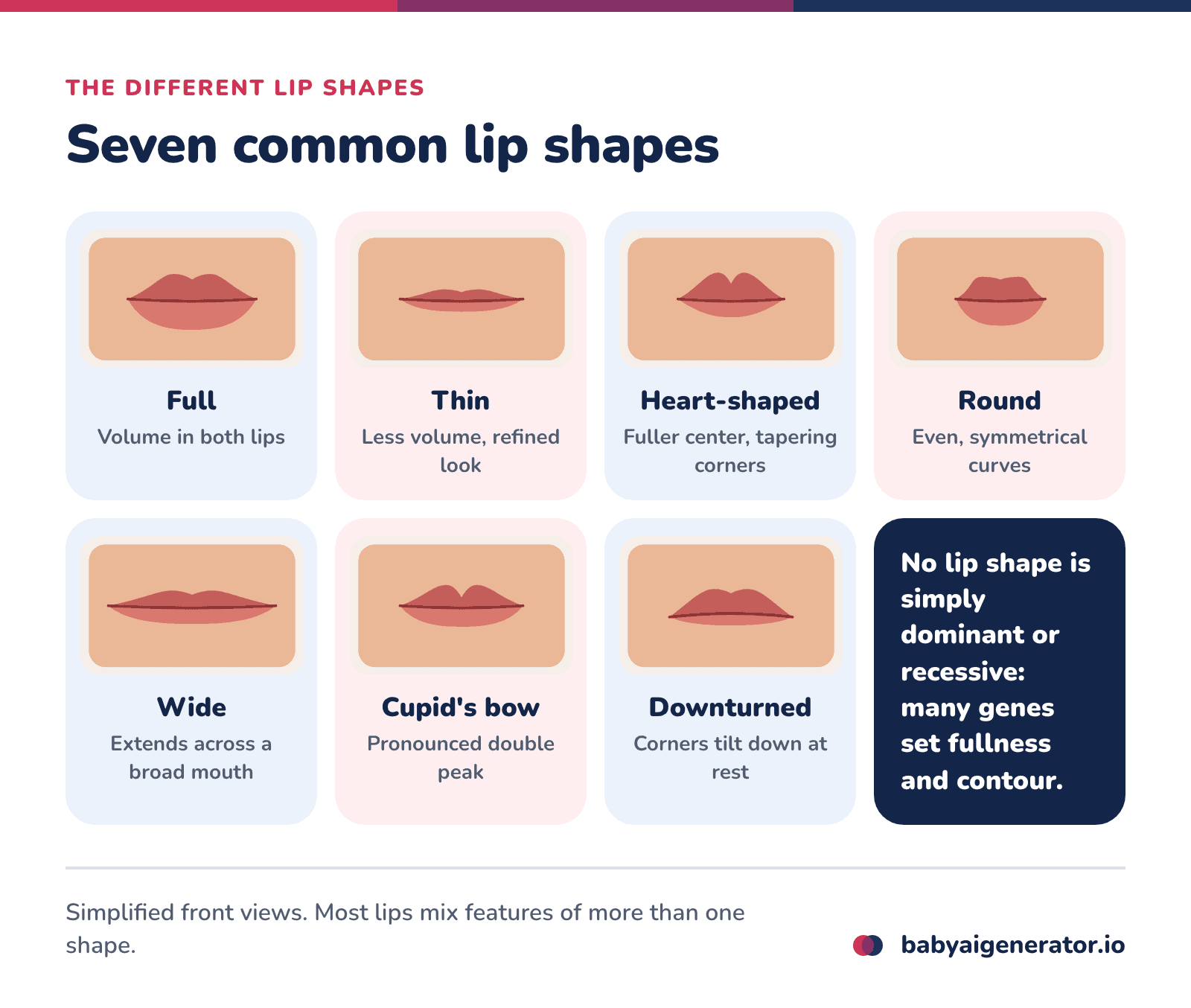
The different lip shapes are listed below:
- Full Lips: Consistent volume and plumpness in both lips.
- Thin Lips: Less volume, with a more refined look.
- Heart-Shaped Lips: Fuller in the center and tapering toward the corners.
- Round Lips: Even curves that look symmetrical.
- Wide Lips: Lips that extend horizontally across a broad mouth.
- Cupid's Bow Lips: A pronounced double peak on the upper lip.
- Downturned Lips: Corners that tilt downward at rest.
Full Lips
Full lips are lips with a balanced, voluminous upper and lower lip. Full lips keep a plump contour across the whole mouth, with a rounded, well-defined vermilion, the visible colored part of the lips. The lower lip is often slightly fuller than the upper lip, and full lips are linked with youthfulness, which makes them a common goal of cosmetic enhancement.
Thin Lips
Thin lips are lips with little volume and fullness in both the upper and lower lips. Thin lips have a narrow height and little tissue mass, with subtle contours and lips that look flat or barely projected from the side. Less of the vermilion shows, which gives thin lips an understated look.
Heart-Shaped Lips
Heart-shaped lips are lips whose outline resembles the top of a heart, with a well-defined V-shaped cupid's bow and a prominent double peak at the center of the upper lip. The upper lip is fuller in the center and tapers toward the corners, while the lower lip is rounded and often slightly narrower.
Heart-shaped lips differ from bow-shaped lips, which have a pronounced cupid's bow but lack the central fullness and tapering of heart-shaped lips. The volume distribution of heart-shaped lips draws attention to the mouth's expressions and smiles.
Does Ethnicity Affect Inherited Lip Shape?
Yes, ethnicity affects inherited lip shape. Genetic makeup differs across populations, which produces differences in lip fullness, width and contour, and fuller lips are more common in populations of African ancestry while thinner lips are more common in populations of European and East Asian ancestry. The differences arose from genetic drift and adaptation over thousands of years in geographically separate groups.
Lip shape varies widely within every ethnic group, so people from the same background can have very different lips. Ethnicity gives a broad statistical context for inherited lip shape but cannot predict an individual's lips.
What Is the Rarest Lip Shape?
The rarest lip shape has no universal answer, though some lip traits and combinations are less common. The less common lip variations are listed below:
- Cupid's Bow With Pronounced Twin Peaks: Sharply defined peaks on the upper lip combined with full, balanced volume in both lips.
- Extreme Heart-Shaped Lips: Lips with a pronounced taper toward the corners that create an exaggerated heart shape.
- Keyhole Pout: A small gap between the lips when the mouth is relaxed.
The rarity of each lip variation differs by region and ethnicity, so a lip shape that is rare worldwide can be common in a particular population.
Why Do Siblings Have Different Lip Shapes?
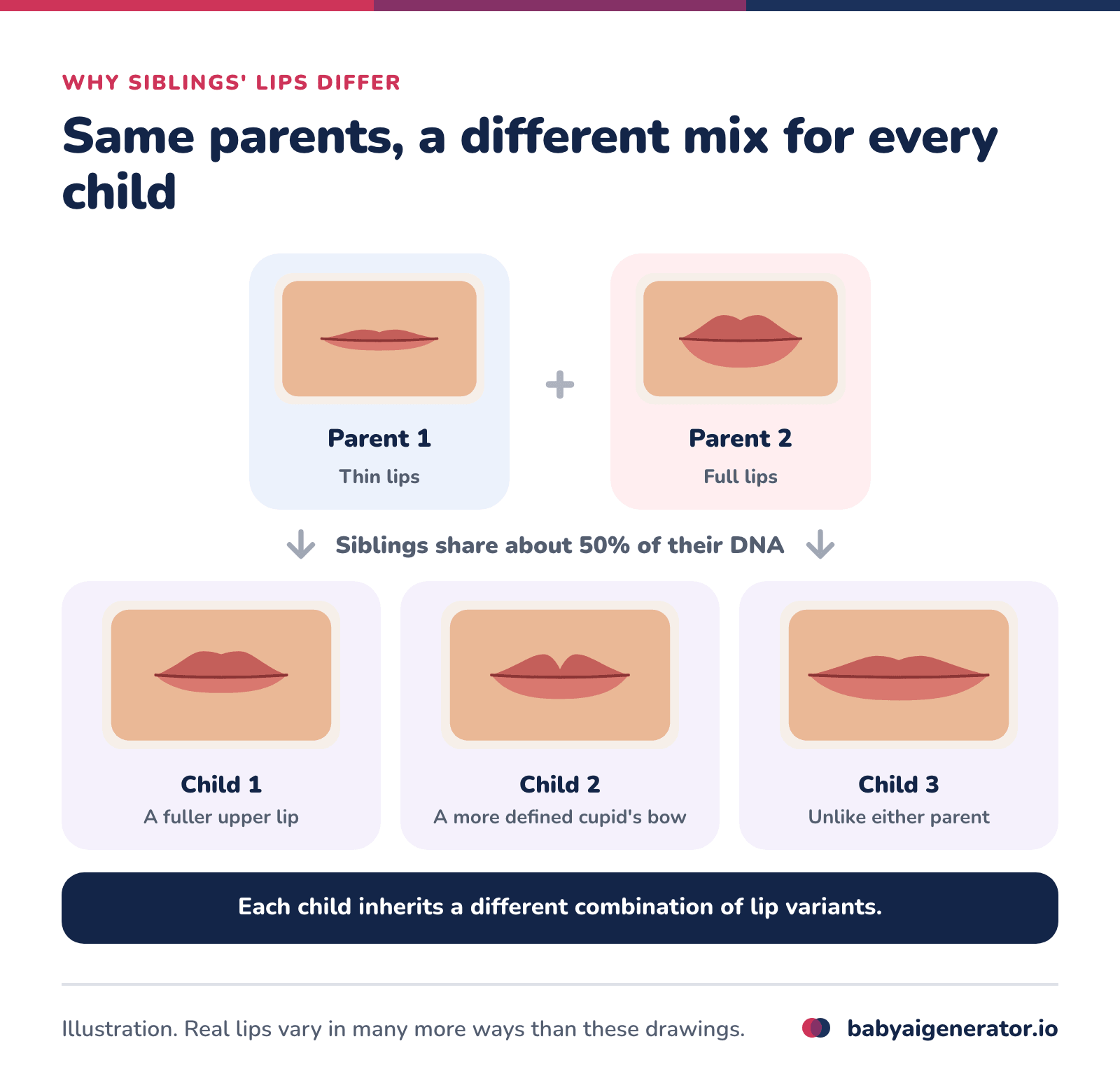
Siblings have different lip shapes because each sibling inherits a different combination of genetic variants from the parents. Siblings share about 50% of their DNA, but the particular variants behind lip fullness, width and contour differ between them, and polygenic inheritance gives each sibling a different mix at conception.
Growth and environmental factors add to the differences, since nutrition and other influences during childhood affect lip thickness and prominence. One sibling may develop a fuller upper lip, while a second sibling has a more defined cupid's bow or a different balance between the upper and lower lips.
The differences between siblings raise the question of how far a baby's lip shape can be predicted from the parents.
Can You Predict a Baby's Lip Shape?
Yes, you can predict a baby's lip shape to some extent, though not with certainty. Lip shape prediction relies on the parents' lip fullness, contour and facial structure, which many genes influence, so predictions are probabilities rather than definite answers.
AI baby generators estimate a baby's lip shape by analyzing the lip contours in parent photos, which shows a likely family resemblance. The baby's actual lips depend on the variants the baby inherits, so the estimate is a visualization rather than a genetic forecast.
How Does the AI Baby Generator Predict Your Baby's Lip Shape?
The AI Baby Image Generator estimates a baby's lip shape by analyzing and combining the visible lip contours in both parents' photos. The AI Baby Generator examines the fullness, width and outline of each parent's lips, including the cupid's bow and philtrum, then maps and blends those features into a likely lip shape for the baby, and the estimate depends on how plainly the parent photos show the lip contours. A baby's lips keep changing in fullness and proportion as the child grows, so the generated lips show one possible resemblance, not the lips the child will certainly have.
Using Neutral-Expression Parent Photos for Lip Shape Predictions
Neutral-expression parent photos give the AI Baby Generator the most accurate view of lip shape. Both parents should be photographed with relaxed, gently closed mouths, good lighting and a straight-on angle, without smiles or heavy makeup that change the cupid's bow and lip width.
Can a Baby's Lip Shape Change as They Grow?
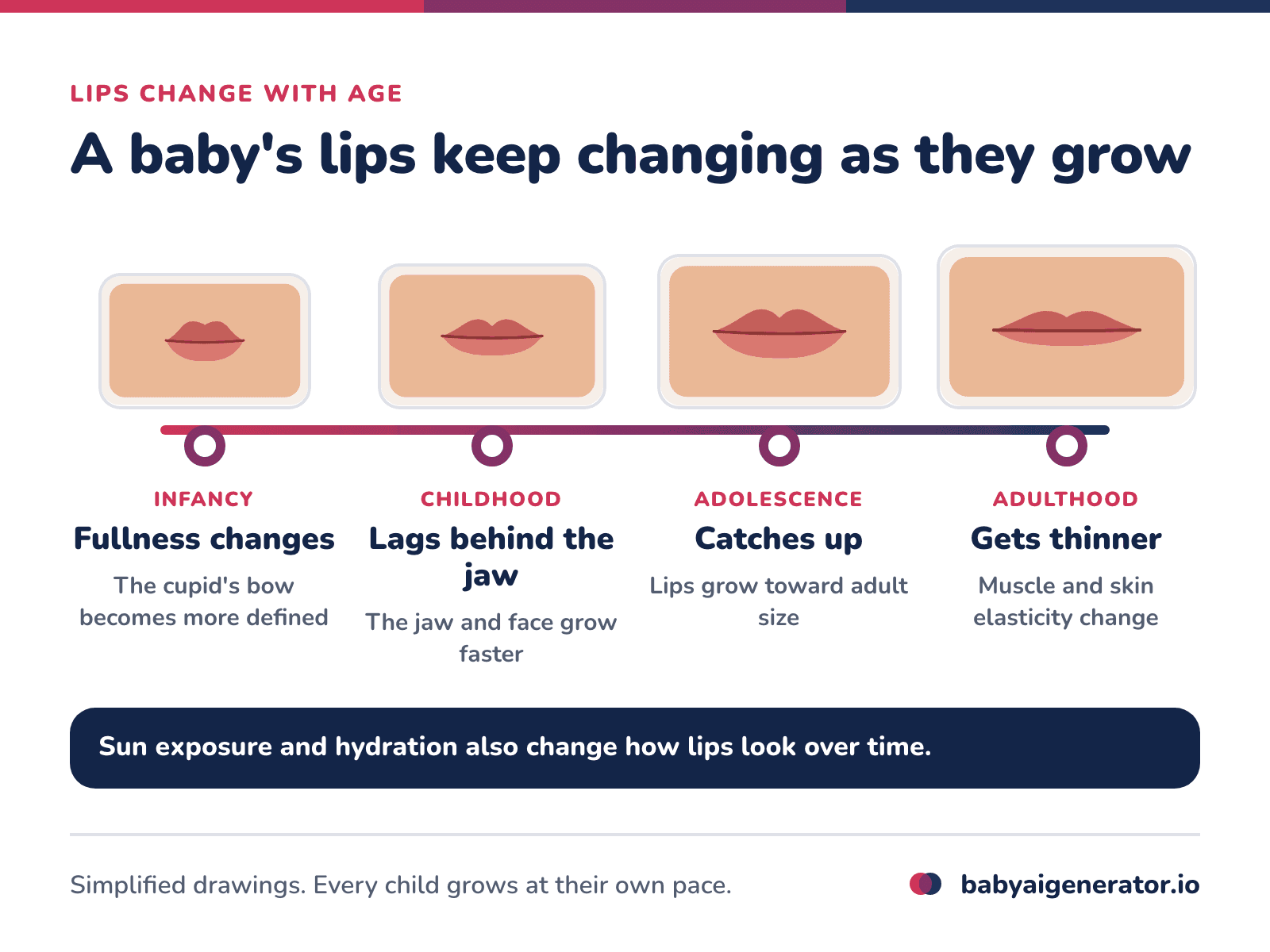
Yes, a baby's lip shape can change as the baby grows. The lips develop at different rates from the jaw and facial bones through childhood and adolescence, so lip fullness and the definition of the cupid's bow can change in infancy, lip growth can lag behind jaw growth in childhood and catch up in adolescence. Lip thickness tends to decrease in adulthood as muscle structure and skin elasticity change, and sun exposure and hydration affect how lips look over time.
Which Facial Features Are Inherited Like Lip Shape?
The facial features inherited like lip shape, each influenced by many genes from both parents, are listed below:
- Nose Shape: The contour and size of the nose.
- Face Shape: Facial structure and contour, including the jawline and cheekbones.
- Eye Shape: The shape and spacing of the eyes.
- Ear Structure: The form and size of the ears.
- Jawline Definition: The profile of the jaw.
Is Nose Shape Inherited Like Lip Shape?
Yes, nose shape is inherited like lip shape, through many genes. Genetic studies have identified several genes that influence nose width, bridge height, nostril size and nose projection, and like lip shape, nose shape follows polygenic inheritance rather than a single dominant or recessive gene, with both parents contributing.
Is Face Shape Inherited Like Lip Shape?
Yes, face shape is inherited like lip shape. Face shape and lip shape both follow a polygenic inheritance pattern, with many genes from both parents shaping facial width, length, cheekbones and jawline in the same way genes shape lip fullness and contour. Neither trait follows a simple dominant or recessive pattern, and growth and environment shape the final appearance of both.
Can a Baby Have Different Lips From Both Parents?
Yes, a baby can have different lips from both parents. Lip shape is polygenic, so the genes from both parents combine in new ways during genetic recombination and can produce lips that resemble neither parent. A child can carry facial variants from grandparents or more distant ancestors as well, so a child's lips can look distinct while remaining biologically related to the parents.
How Much of Lip Shape Comes From Genes?
Most of lip shape comes from genes. Twin studies show that identical twins, who share all their DNA, have strikingly similar lip fullness, width and contour, while fraternal twins, who share about half, show more variation. A 2017 King's College London study of about 1,000 twins, "Heritability maps of human face morphology through large-scale automated three-dimensional phenotyping" (Scientific Reports), ranked the areas above and below the lips among the most heritable parts of the face, and Weinberg and colleagues found strong heritability for upper lip height and projection in "Heritability of face shape in twins: a preliminary study using 3D stereophotogrammetry and geometric morphometrics" (Dentistry 3000, 2013). Aging and lifestyle modify lip appearance, but the fundamental shape of the lips is largely inherited, which confirms that lip shape is genetic.
Written by The Baby AI Generator team. We build the generator on this site and write about what it can and can't tell you.